Some links on this page are affiliate links, which means I may earn a small commission if you book through them. Thank you for supporting my blog!
Traveling to Thailand was such a wonderful experience and quickly became one of my favorite countries to visit (you can probably tell from my previous Bangkok blogs). There is so much to see, from vibrant cities to beautiful beaches and stunning temples. That said, there are a few important things to know before going to Thailand, so I’ve compiled a list of 10 must-know tips to help you prepare for your trip.
1. Complete Your Arrival Card Before Landing
All foreign travelers (non Thai citizens) are required to complete the Thailand Digital Arrival Card (TDAC) within 72 hours before arrival. Based on my personal experience, I’ve had to complete arrival cards for most countries I’ve visited, and the process is usually easy since it’s online and free to submit. You can fill out the digital arrival card on Thailand’s official immigration website.
2. Charger Type
Thailand commonly uses plug types A, B, C, and O, with Type O being the Thailand-specific standard you’ll see most often. Because outlets can vary depending on where you stay, I recommend bringing a Type O adapter or a universal travel adapter to ensure your devices work without issues.
3. Purchase an eSIM for the Best Connection
Having a reliable internet connection is important for me since I rely on it heavily for maps, transportation, and communication while traveling. Before my trips, I usually purchase an eSIM through Klook, as I’ve consistently had a smooth experience and appreciate that I can activate it myself by following their instructions. Just be sure not to activate the eSIM until you land in Thailand, as activating it early may cause the plan to start before arrival. I also prefer this option over purchasing SIM cards or eSIMs from airport vendors, which are often more expensive.
4. Transportation in Thailand
There are many ways to get around Thailand, and the best option often depends on which part of the country you’re visiting and the sites you plan to see. Here are the main transportation options:
Bangkok Skytrain (BTS):
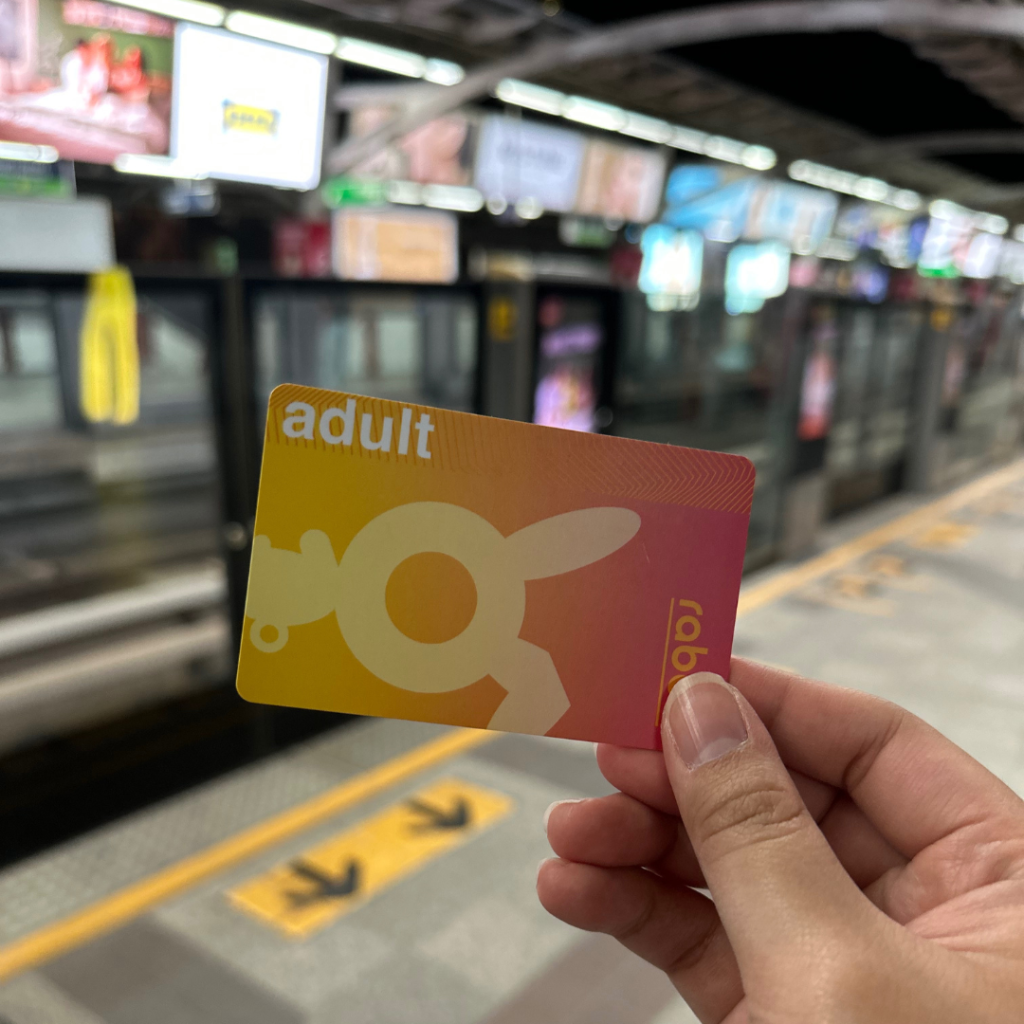
I mainly stayed in Bangkok, and you can rely heavily on the Bangkok Skytrain (BTS), as it’s accessible in many parts of the city and is one of the best ways to avoid Bangkok’s heavy traffic. You can purchase a Rabbit Card at select BTS stations, which allows for faster entry and exit compared to buying single-journey tickets. For foreign travelers, a passport is required for identity verification, and payment is typically cash only at the counter. The Rabbit Card has a 100 THB card issuance fee, plus a minimum stored value top-up of 100 THB, bringing the initial cost to at least 200 THB. You can reload the card at BTS stations as needed, and fares are deducted based on distance traveled. The Rabbit Card can also be used on some MRT lines (such as the MRT Blue Line), which makes transferring between systems more convenient.
Grab:
Similar to Uber, Grab is a widely used transportation app across Southeast Asia that you can download and sign up for on your phone. I used Grab for rides between the airport and my hotel, as well as for shorter trips around the city. Grab is available not only in Bangkok but also in other major cities in Thailand, including Chiang Mai, Phuket, Pattaya, and Krabi. If you’re using Grab to get around Bangkok, keep in mind that traffic congestion can be significant, especially during peak hours, and a 30-minute ride can easily turn into a much longer trip. Because of this, public transportation like the BTS or MRT is often faster within the city.
Tuk Tuk:
A tuk tuk is a small, open air, three wheeled motorized vehicle that is commonly used for short trips in Thailand, especially in cities and tourist areas. It is a convenient and iconic way to get around for quick rides and sightseeing, and it offers a more local travel experience compared to taxis or rideshare apps. However, fares can be more expensive, especially for foreigners, since prices are usually not metered and should be negotiated before the ride begins.
Taxi:
Aside from Grab, you can also use taxis in Thailand, especially if Grab is not available. Always ask the driver to use the meter before starting the ride, as taxis are required to charge by meter. You will know a taxi is available when you see a glowing red sign in the front window, which is the Thai script for the word “free.” When exiting the taxi, watch out for motorcycles and motorbike taxis, as they are very common in Bangkok, and always exit using the door closest to the curb for safety.

5. Learn a Few Basic Thai Phrases
Something I always like to do before traveling to a country is learning at least a few basic phrases in the local language. Locals appreciate the effort, and it is seen as respectful and polite. Here are some basic Thai phrases you can learn before your trip:
- Hello – Sawasdee (สวัสดี) — sah wah dee
- Thank you – Khop khun (ขอบคุณ) — kop koon
- Thank you very much – Khop khun mak (ขอบคุณมาก) — kop koon mahk
- Excuse me / Sorry – Khor thot (ขอโทษ) — kaw tote
- Yes – Chai (ใช่) — chai
- No – Mai chai (ไม่ใช่) — my chai
Cultural tip: People often add ka (for women) or krub (for men) at the end of phrases to sound more polite, for example Khop khun ka or Khop khun krub.
6. Weather in Thailand
Thailand is a tropical country, so you will most likely experience hot and humid weather while you’re there. However, there are three main seasons that affect rainfall and temperature throughout the year. Here are the seasons in Thailand to help you plan when to travel based on the weather:
Cool season (November to February):
I visited Thailand during this season, which is also the most popular time to travel due to slightly cooler temperatures and lower humidity. It is ideal for sightseeing, exploring cities, and enjoying beach destinations.
Hot season (March to May):
During this season, you can expect stronger sun, higher temperatures, and increased humidity. If you’re planning to travel during this time, be sure to pack sunscreen or purchase it at a local Thai store, and stay hydrated throughout your sightseeing.
Rainy season (June to October):
This season brings short but heavy rain showers, usually in the afternoon or evening. Travel is still very doable, but be sure to pack or buy an umbrella and carry it with you while sightseeing in case it starts to rain.
7. Proper Attire to Wear When Visiting Temples
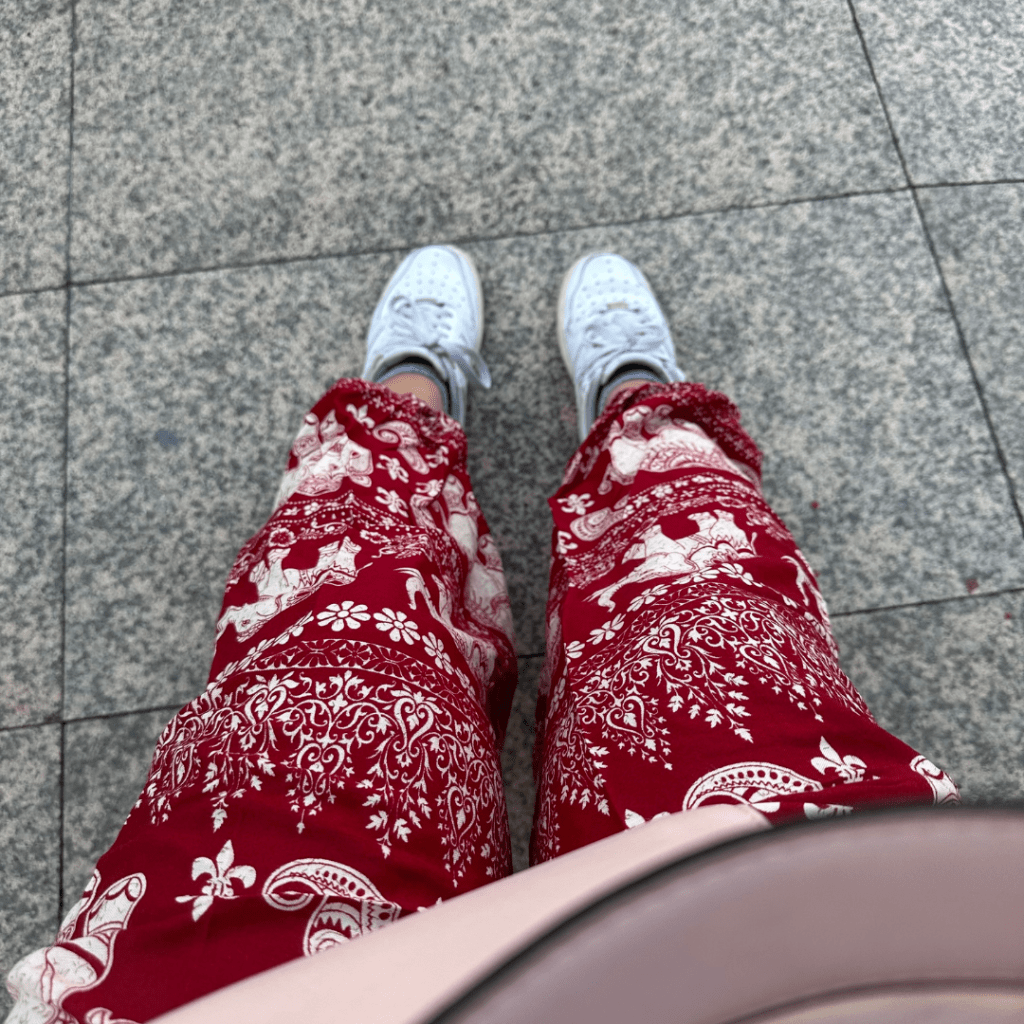
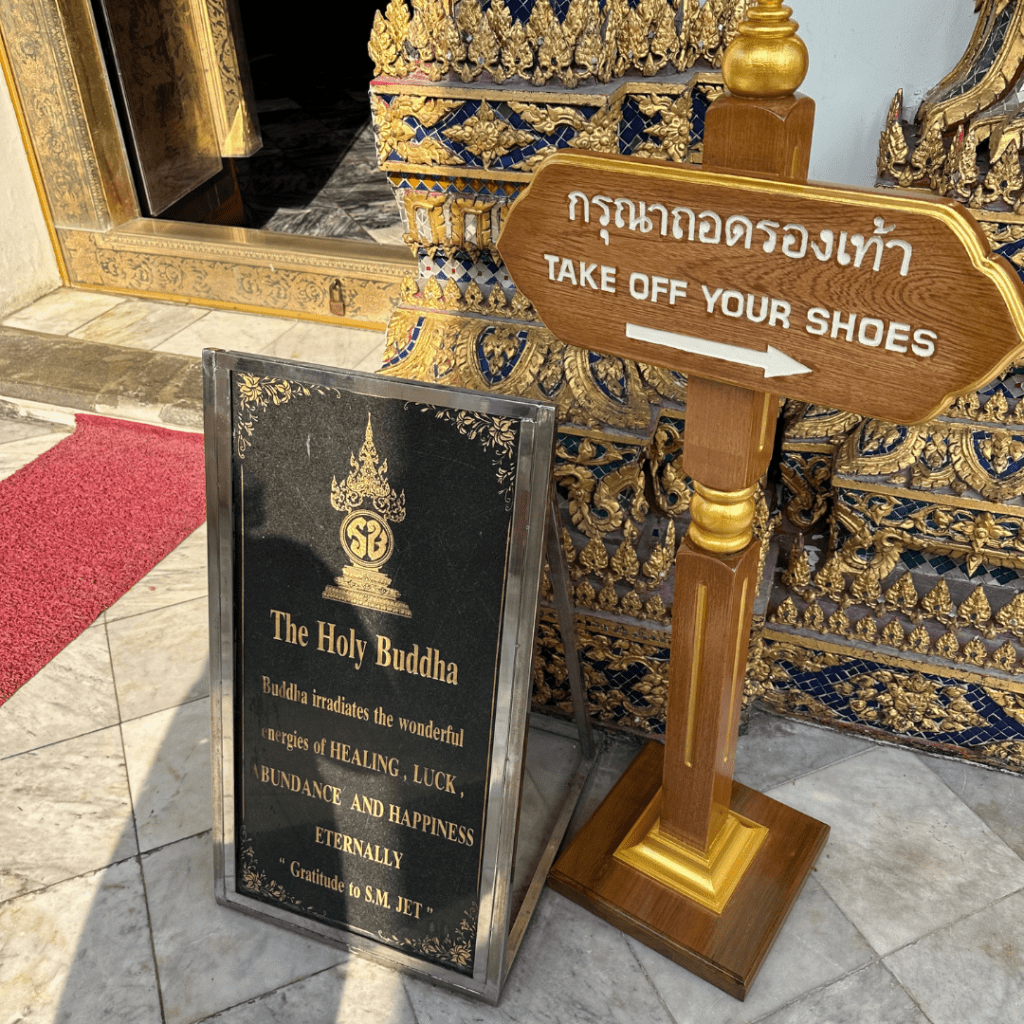
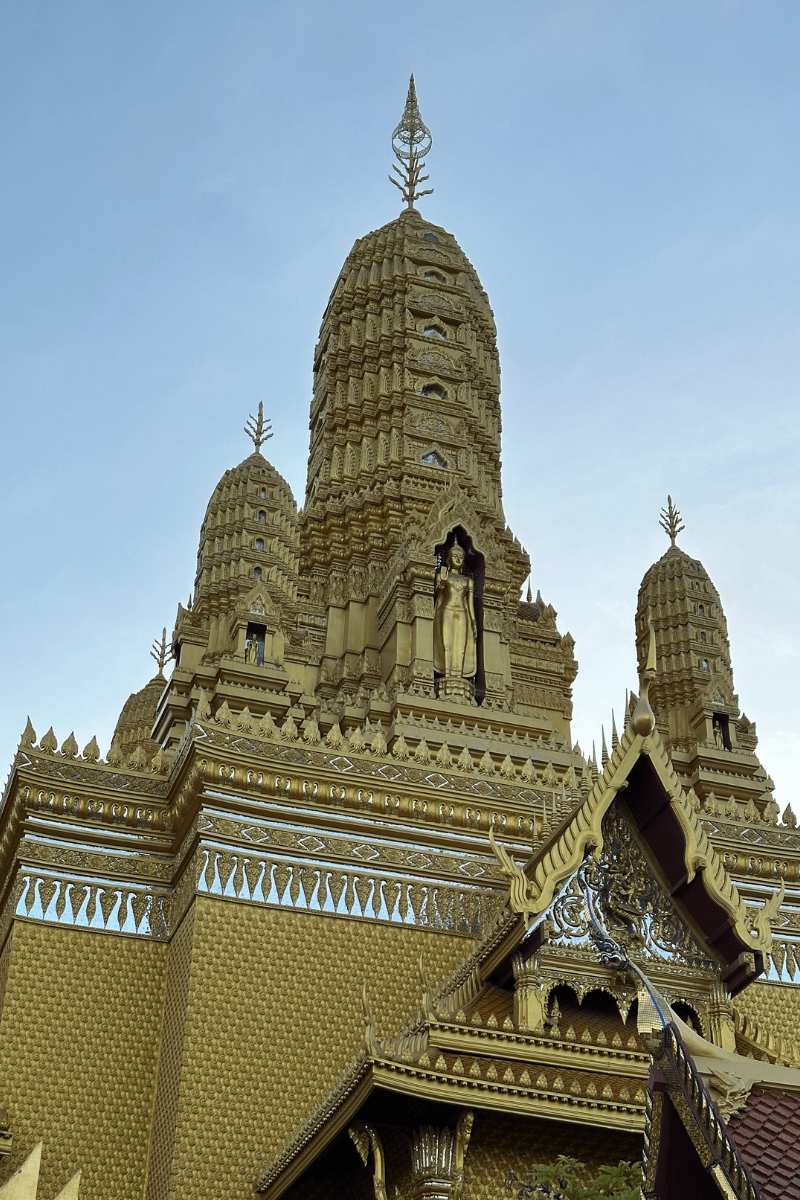
Temples are popular sites to visit in Thailand, and if you plan on visiting one, wearing proper attire is required or you may not be allowed to enter. Both men and women should wear clothing that covers the shoulders and knees, such as shirts with sleeves and long pants or skirts. Avoid tank tops, crop tops, short skirts, shorts above the knee, and sheer clothing. If you forget to bring modest clothing, you can easily purchase items like Thai pants, which are widely sold at shops near temples and are both affordable and comfortable. You will also need to remove your shoes before entering temple buildings, so wearing shoes that are easy to take off is helpful.
8. Paying in Thailand
While hotels, large restaurants, and malls accept cards, Thailand still relies heavily on cash, especially at local markets, street food vendors, some attraction sites, and for transportation like taxis and tuk tuks. ATMs are widely available throughout cities and tourist areas, making it easy to withdraw cash when needed.
9. Watch Out for Common Travel Scams
Every country has its own scams to be aware of when traveling, and Thailand is no exception. While most visits are safe and enjoyable, being aware of a few common scams can help you stay alert and avoid unnecessary stress. Here are some of the most common ones to watch out for:
Attraction “closed” scam:
Someone may tell you that a popular site, such as the Grand Palace, is closed and then offer to take you on an alternative tour or a free ride. In most cases, the attraction is open, and this is a way to redirect you elsewhere.
Dress code scam:
You may be told your outfit is not acceptable for a temple or attraction and encouraged to buy clothing from a nearby shop. While dress codes do exist, it is best to verify rules at the entrance rather than through strangers.
Overpriced tuk tuk tours:
Some tuk tuk drivers may offer very cheap or free rides but then take you to shops where they earn commissions. Agree on the destination and price before getting in.
Taxi scam:
Some taxi drivers may refuse to use the meter and quote a higher flat rate, especially near tourist areas. Always ask for the meter to be turned on before the ride, and if the driver refuses, find another taxi or use Grab or public transportation instead.
10. Do’s and Don’ts in Thailand
Understanding local customs in Thailand can go a long way in showing respect and making your trip smoother. While Thailand is very welcoming to visitors, being mindful of cultural norms helps you avoid uncomfortable situations and shows appreciation for the local culture.
Do’s:
- Dress modestly at temples
- Use polite language and learn a few basic Thai phrases
- Carry cash for markets, street food, and local transportation
Don’ts:
- Do not disrespect the monarchy, even casually, as it is taken very seriously
- Do not touch someone’s head, as it is considered the most sacred part of the body
- Do not point your feet at people or religious objects


 FindKristineAbroad
Leave a comment