Some links on this page are affiliate links, which means I may earn a small commission if you book through them. Thank you for supporting my blog!
If there’s one thing you can’t miss when visiting Egypt, it’s spending a day in Giza! I’m still in awe that I had the chance to see one of the Seven Wonders of the Ancient World — the Great Pyramids of Giza. Exploring the pyramids, the iconic Sphinx, the ancient necropolis of Saqqara, and the historic city of Memphis was an experience that left me amazed at every turn. These sites aren’t just incredible photo spots, they’re also rich with history and culture that bring Egypt’s past to life. Keep reading for the ultimate guide to visiting these must-see destinations.
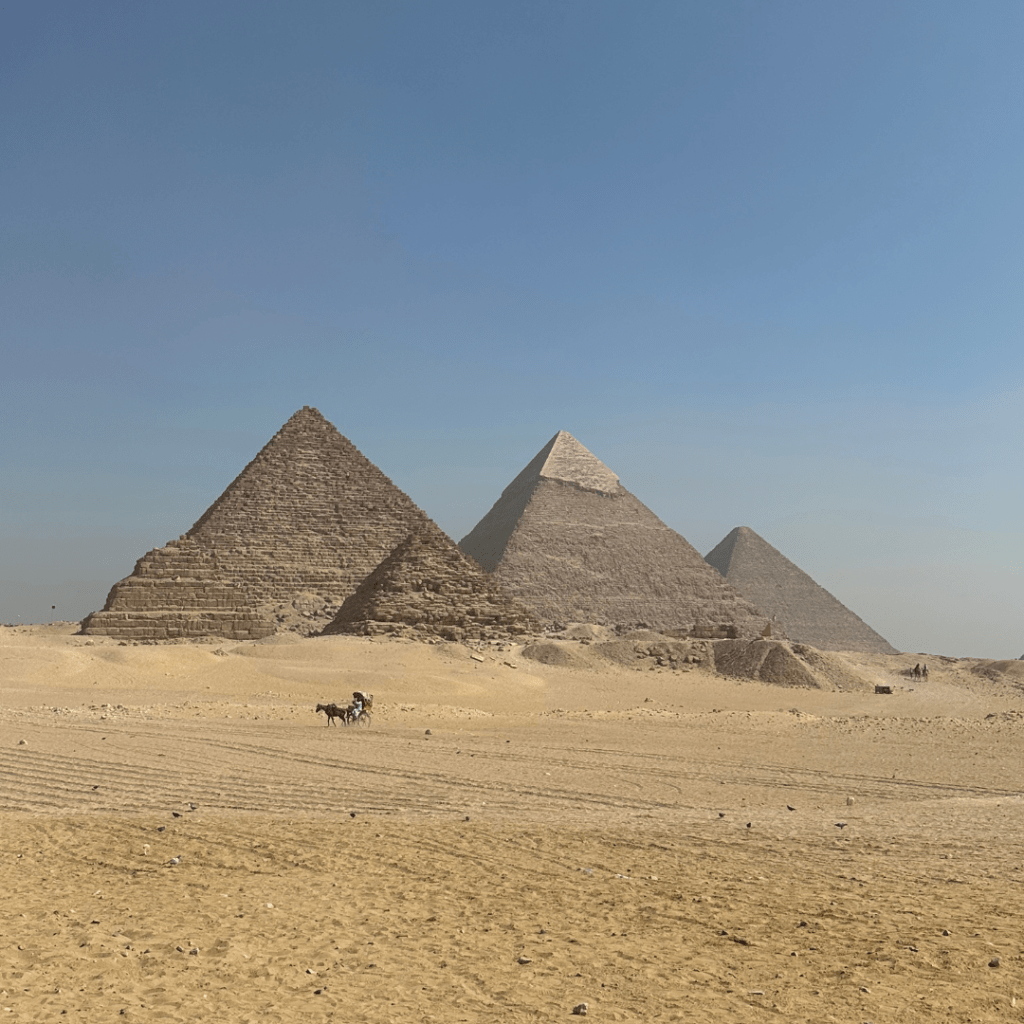
Getting to Giza, Saqqara & Memphis
While public transportation is technically an option, it’s much easier, faster, and still affordable to take Uber directly from your hotel to these sites. Another great choice is to hire a tour guide. I went with a guide, and it made the experience so much better — not only did we learn the history behind each site and get answers to all our questions, but we also picked up useful local tips along the way. An added bonus: guides help keep away the many touts who tend to approach tourists, which made the visit much more enjoyable. If you’re interested, you can easily book a tour through platforms like Klook (which is the one I personally used).
Here are the locations of each site for easy reference:
Pyramids of Giza & The Sphinx
Saqqara Necropolis
Mit Rahina Museum (Ancient Memphis)
*Note: When visiting Memphis today, the main site to see is the Mit Rahina Museum, which houses artifacts and statues from the ancient city.*
If you’re interested in getting to these attractions via public transportation from Cairo, here’s how you can do it. While it’s the most budget-friendly option, keep in mind that it can be time-consuming and sometimes confusing if you don’t speak Arabic. Most routes involve taking the metro and then transferring to microbuses or local taxis for the final stretch.
1. Pyramids of Giza & the Sphinx
- Metro + Minibus/Taxi: Take Cairo Metro Line 2 (the red line) to Giza Station. From there, you can take a minibus or a taxi straight to the Pyramids entrance (about 15–20 minutes).
- Microbuses leave frequently outside the station heading toward Al-Haram Street, which passes near the Pyramids.
- Expect the trip from central Cairo to take about 40–60 minutes in total.
Even if you get close with public transport, the last stretch to the entrance is usually easiest with a short taxi or Uber ride.
2. Saqqara Necropolis
- There is no direct metro line to Saqqara. Instead:
- Take the metro to El-Mounib Station (southern end of Line 2).
- Outside, you’ll find microbuses heading toward Saqqara village.
- From Saqqara village, take a taxi or tuk-tuk to reach the necropolis entrance (around 15 minutes).
- Microbuses leave frequently outside the station heading toward Al-Haram Street, which passes near the Pyramids.
- Total journey: 1.5–2 hours depending on connections.
This route is doable but can be confusing if you don’t speak Arabic. Many travelers prefer Uber or a guide for convenience.
3. Memphis (Mit Rahina Museum)
- From El-Mounib Metro Station, take a microbus heading toward Badrashein (Badrashin).
- Get off near Mit Rahina village and continue by taxi/tuk-tuk to the museum.
- Total journey: Around 2 hours from central Cairo.
Since Saqqara and Memphis are close together, many people combine both sites in one trip — and you’ll usually transfer through the same areas if using public transport.
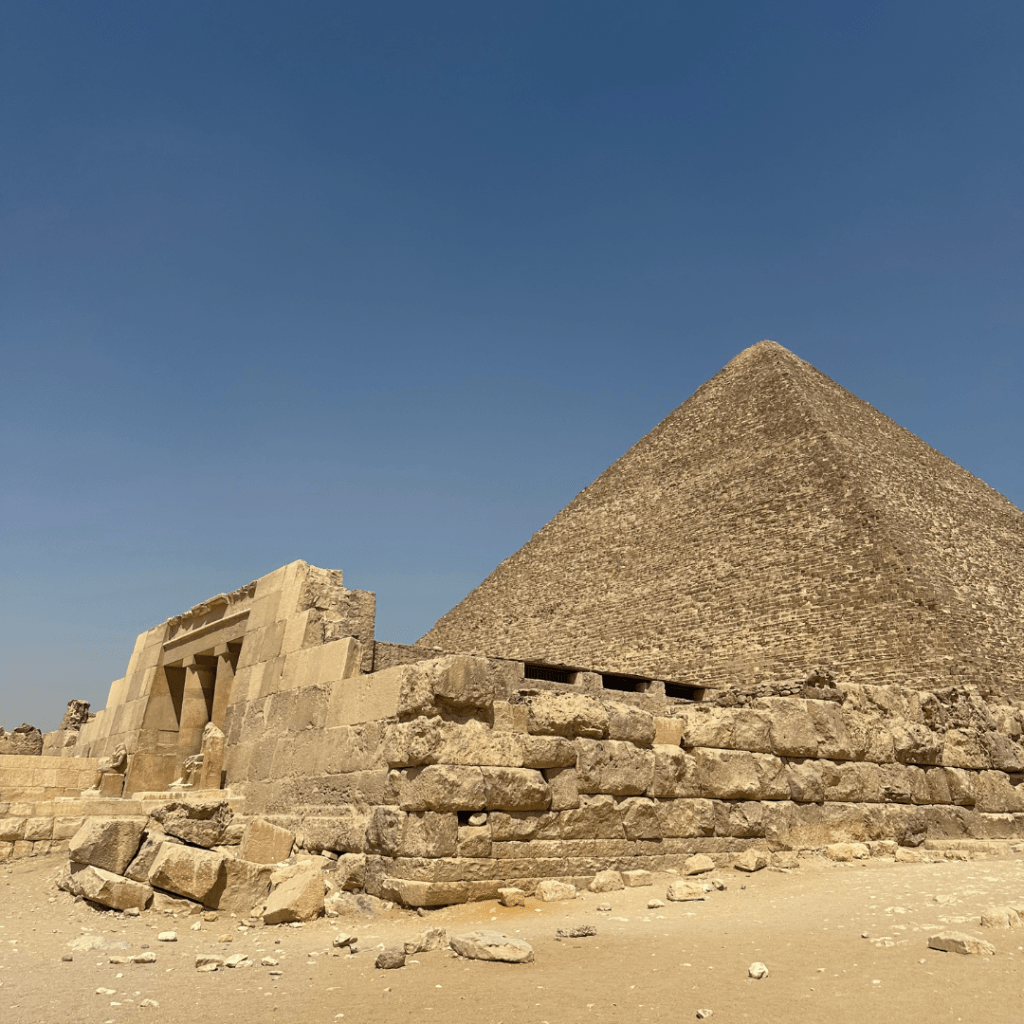
Exploring the Giza Plateau
Probably the most anticipated site to visit in Egypt, the Great Pyramids and the Sphinx of Giza are everything you’d imagine and more. I was absolutely starstruck seeing the pyramids in person as it had been a dream of mine for as long as I can remember. Ironically, just a few months before my trip I was reading The Alchemist by Paulo Coelho, and if you know the book, you’ll understand the significance of the pyramids in the main character’s journey. Without giving away spoilers (highly recommend reading it!), the story reminded me to follow my dreams, and here I am writing about my visit to the pyramids. Enough book talk, here’s everything you need to know about exploring the Giza Plateau.
Before You Start Exploring
When you arrive at the Giza Plateau, you’ll first pass through security, where your bag is scanned and you walk through a detector. After that, you’ll scan your general entry ticket (currently EGP 540 / about $11 USD for adults) which can be purchased online or at the entrance. Keep in mind that going inside the pyramids requires separate tickets that can be bought at the gate.
Just past the entrance, you’ll find restrooms — they’re spacious, clean, and free to use, so I recommend stopping here before heading out.
Since the Giza Plateau is massive, free shuttle buses run inside the complex to take visitors between the pyramids, the Sphinx, and other key spots. This is the best way to save time and avoid exhausting walks under the desert sun.
Suggested Route Around the Plateau
To make the most of your visit, it helps to follow a planned route. Here’s a simple way to explore it:
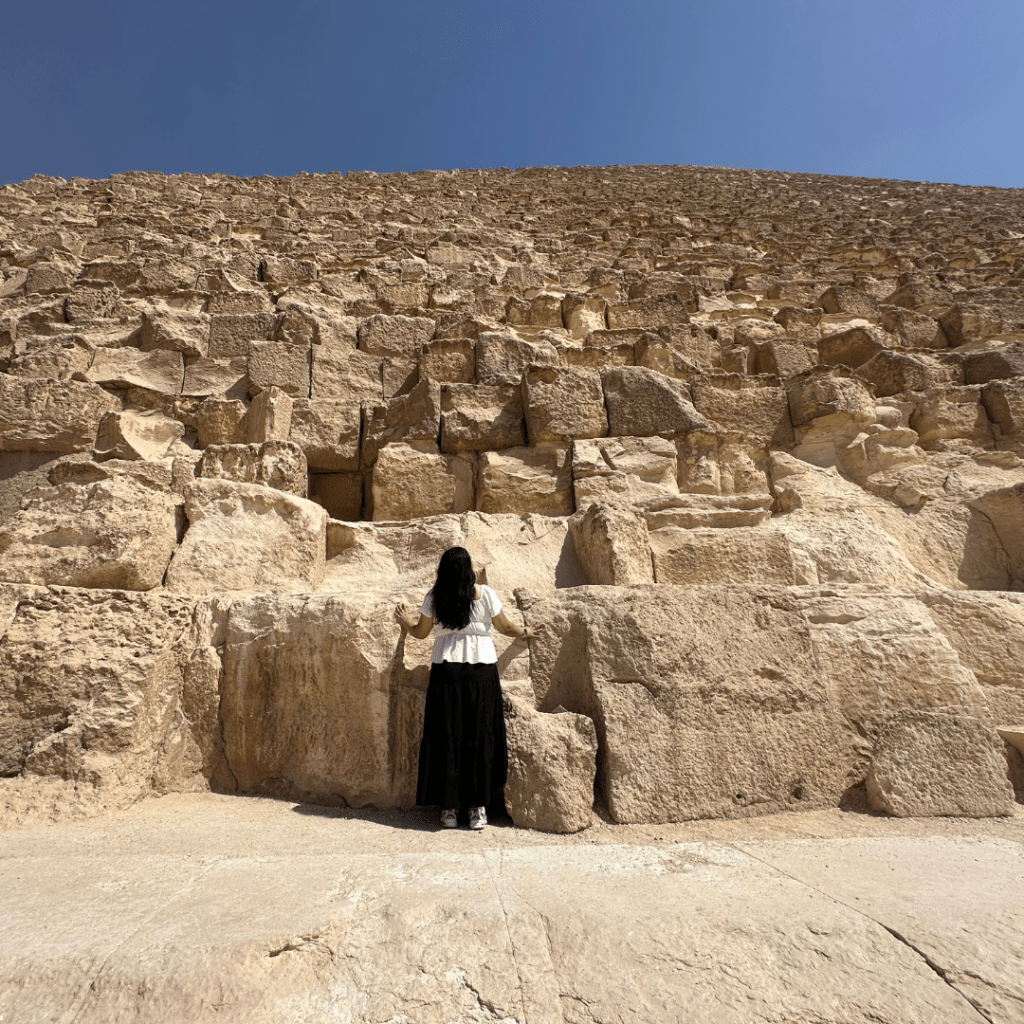
1. Start at the Great Pyramid of Khufu
The largest and oldest pyramid, and one of the Seven Wonders of the Ancient World.
- Shuttle Stop: right by the Khufu entrance
- Going inside Khufu requires a separate ticket (EGP 900/about $19 USD)
Don’t miss the Queen’s Pyramids nearby.
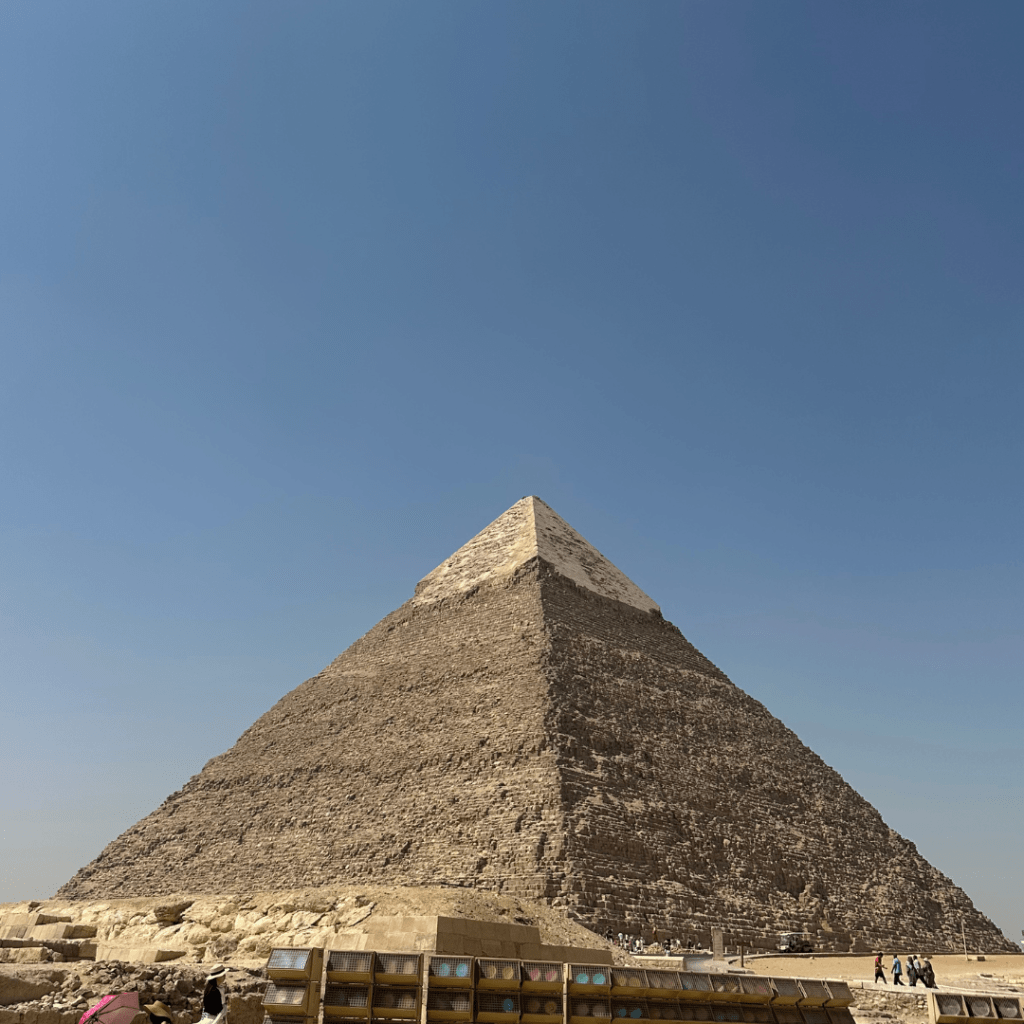
2. Move to the Pyramid of Khafre
Slightly smaller but easy to spot thanks to its casing stones near the top.
- Shuttle Stop: along the causeway between Khufu and Khafre
- Optional inside entry: EGP 220 (about $5 USD).
Offers one of the best panoramic views of all three pyramids.
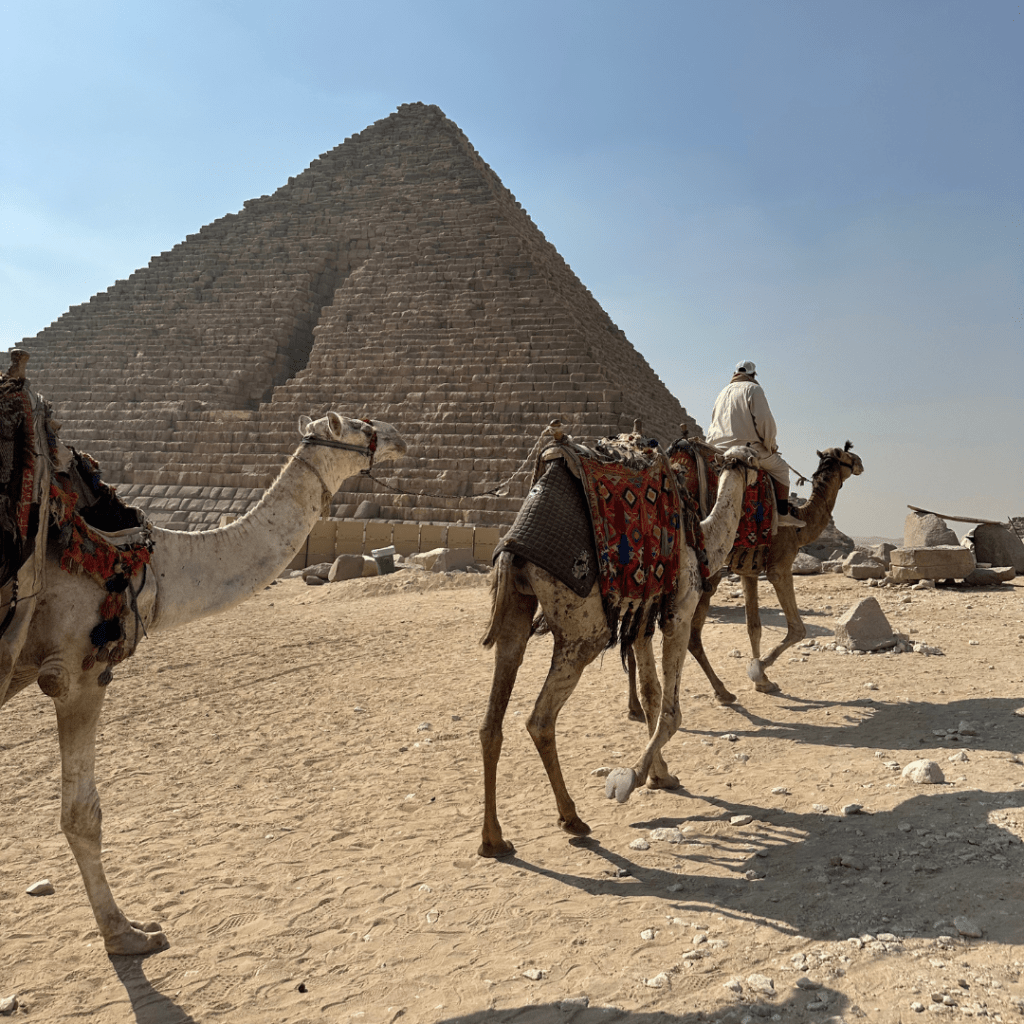
3. Stop at the Pyramid of Menkaure
The smallest of the three main pyramids.
- Shuttle Stop: near Menkaure, with shuttles looping back toward the Sphinx
- Optional inside entry: EGP 220 (about $5 USD)
Surrounded by several smaller pyramids built for queens.

4. End at the Great Sphinx & Valley Temple of Khafre
The Great Sphinx is the most photographed spot on the plateau.
- Shuttle Stop: drops you right at the Sphinx entrance area.
Nearby, explore the Valley Temple of Khafre, once used for rituals and mummification.
Where to Eat Inside the Complex
Being out in the desert exploring will definitely make you hungry and thirsty (it sure did for me). Inside the Giza Plateau, food options are limited, but there are still a couple of choices to keep you going.
- 9 Pyramids Lounge: The only full-service restaurant inside the complex. It offers panoramic views of all three pyramids and is perfect if you want to sit down, cool off, and enjoy a proper meal with a view.
- Snack Stalls & Cafés: Scattered around the plateau, these stands sell bottled water, sodas, chips, and light snacks to keep you refreshed during your visit.
If you’re looking for more variety, there are also many restaurants just outside the complex that boast incredible views of the pyramids, such as Abu Shakra, small rooftop cafés, and even the famous Pizza Hut overlooking the Sphinx.
Shopping Inside the Complex
One thing I made sure not to skip was shopping for souvenirs — it’s the perfect way to take home a piece of Egypt. Inside the Giza Plateau, there aren’t official shops, but you’ll still find plenty of opportunities to browse.
- Souvenir Stalls & Vendors: Scattered around the site, you’ll see stands selling papyrus art, miniature pyramids, scarabs, jewelry, and statues. Prices are usually negotiable, so don’t be afraid to bargain.
If you prefer shopping where prices are fixed, many travelers choose to buy souvenirs outside the plateau or at official museum shops in Cairo. Still, browsing the stalls inside the complex can be a fun and memorable part of the experience.
How Much Time to Spend
The average time to spend at the Giza Plateau is around 4–5 hours. This gives you enough time to explore the pyramids, Sphinx, and other activities without feeling rushed, with room to stop for lunch either inside the complex or at a nearby restaurant with pyramid views.
Visiting Saqqara
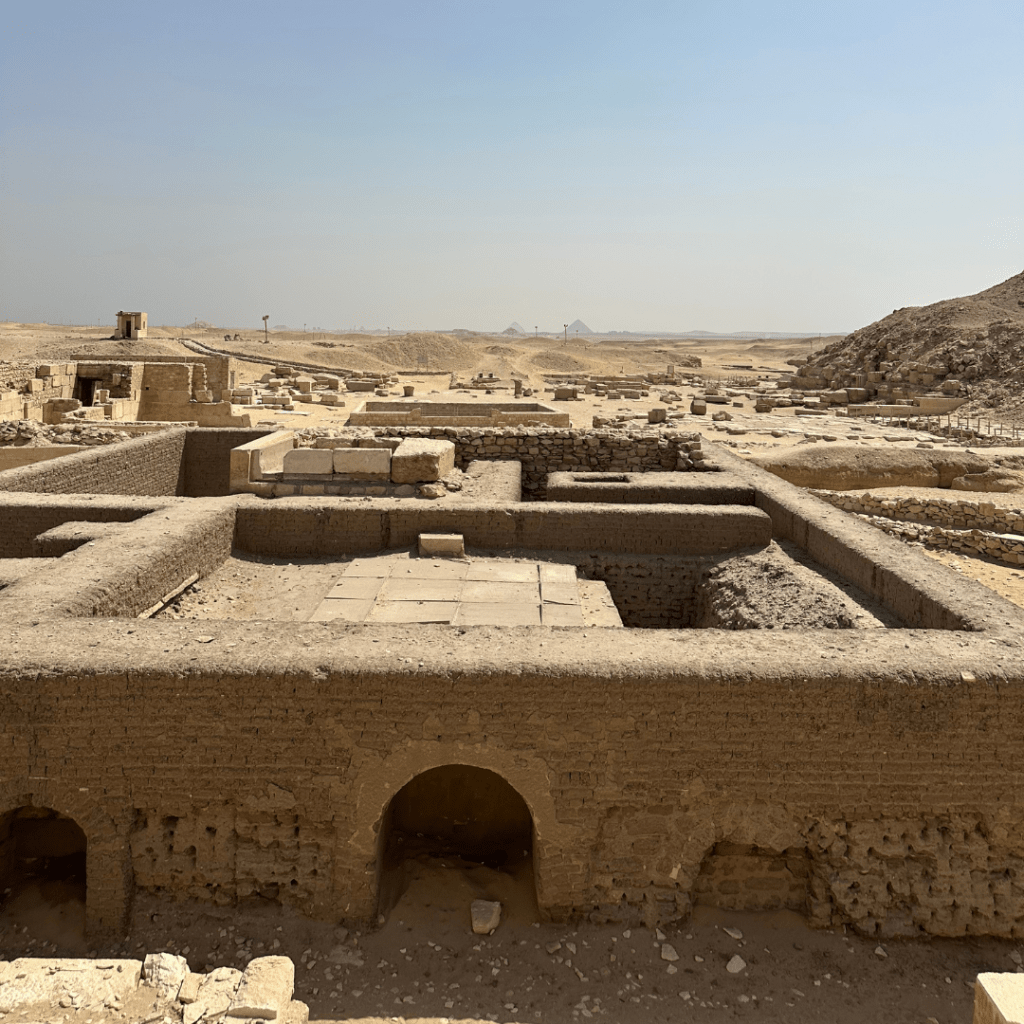
Aside from the Giza Plateau, Saqqara is another site you’ll want to add to your itinerary. Located about 30 km (19 miles) south of Giza, this ancient necropolis is home to the Step Pyramid of Djoser, the very first pyramid ever built in Egypt. When I visited, it personally felt much calmer and less crowded compared to Giza, which made it a really peaceful experience. Here’s what you can expect when visiting Saqqara.
Before You Start Exploring
To enter Saqqara, you’ll need a general entry ticket for the necropolis (currently EGP 450 / about $10 USD for adults). Some attractions, like certain tombs or the Serapeum, require separate tickets that can be purchased at the entrance.
Facilities here are more limited than at Giza, but there are restrooms near the entrance, so it’s best to plan ahead before you start exploring.
Unlike the Giza Plateau, Saqqara does not have shuttle buses inside the complex. You’ll either walk between sites or rely on a driver or guide to take you from one spot to another, which makes comfortable shoes a must.
Attractions in Saqqara
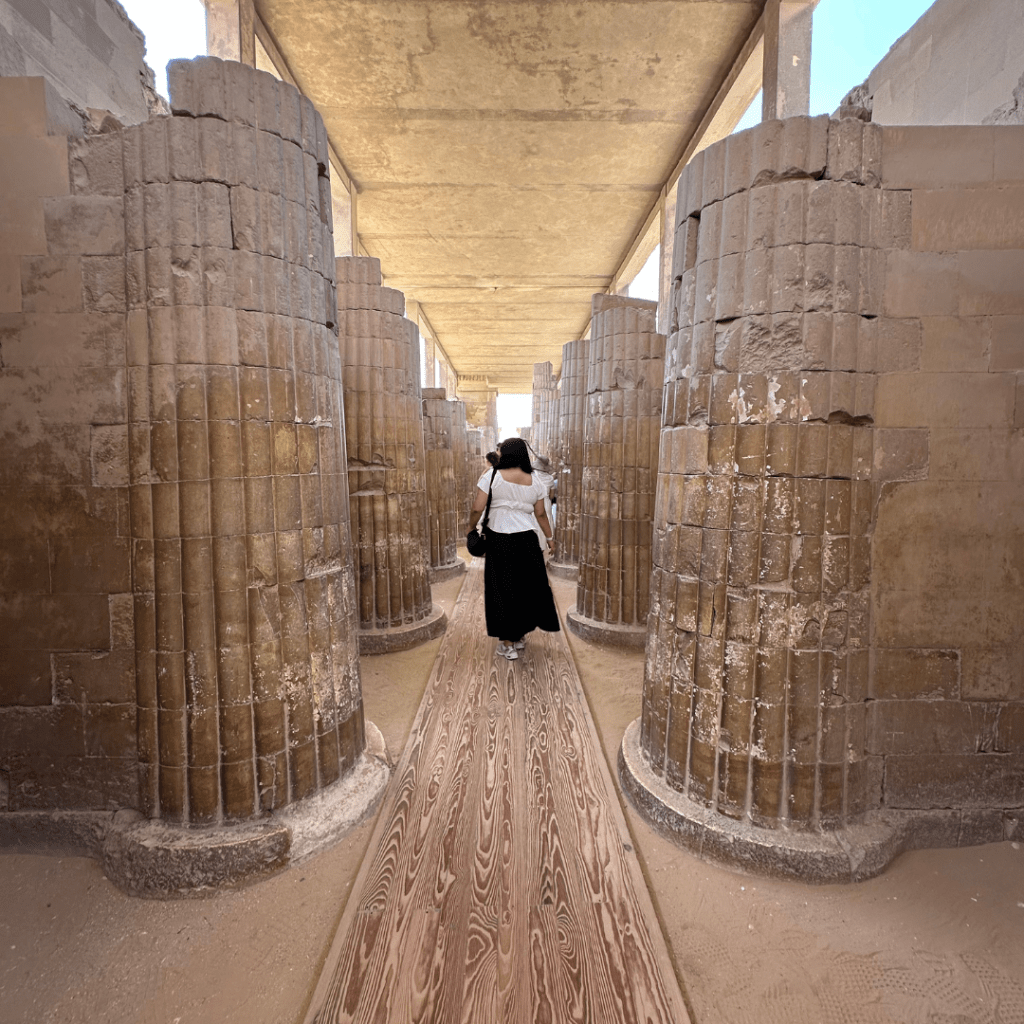
1. Entrance Colonnade of Djoser’s Complex
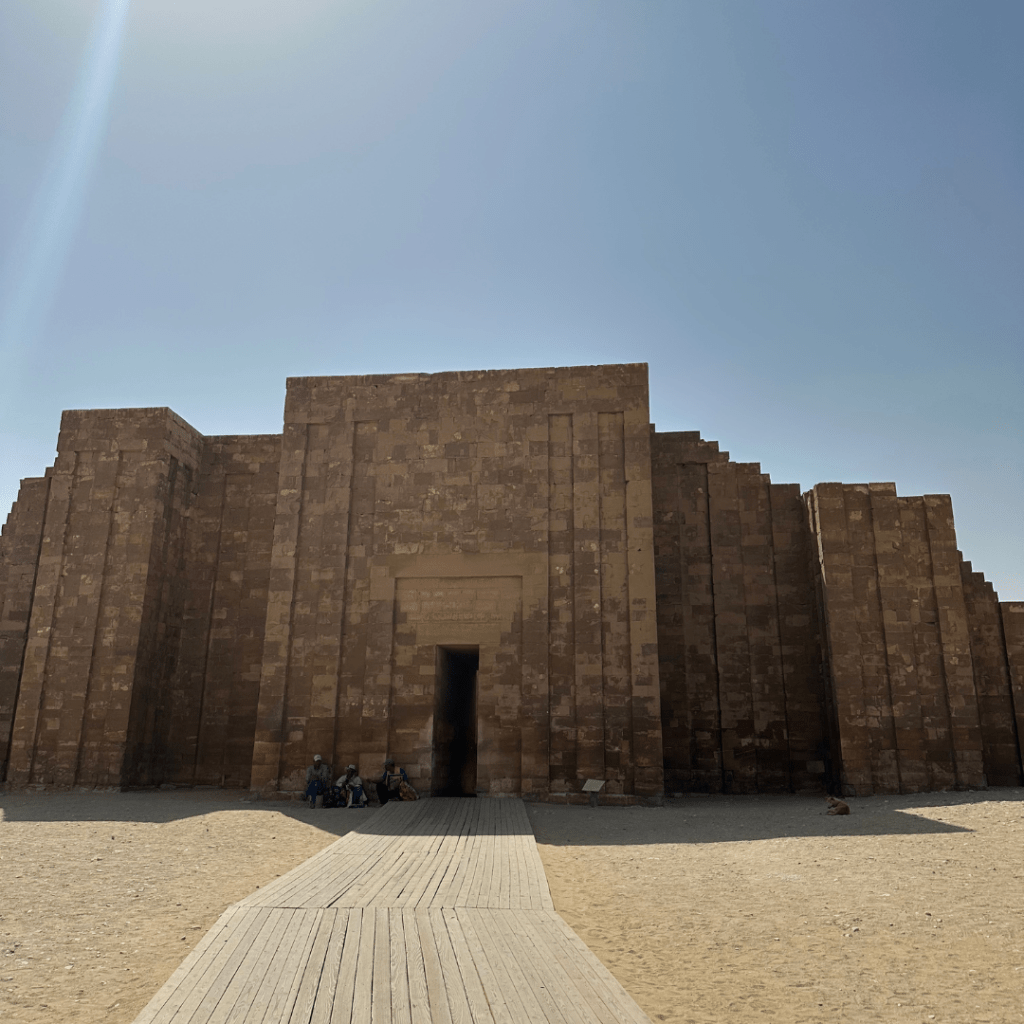
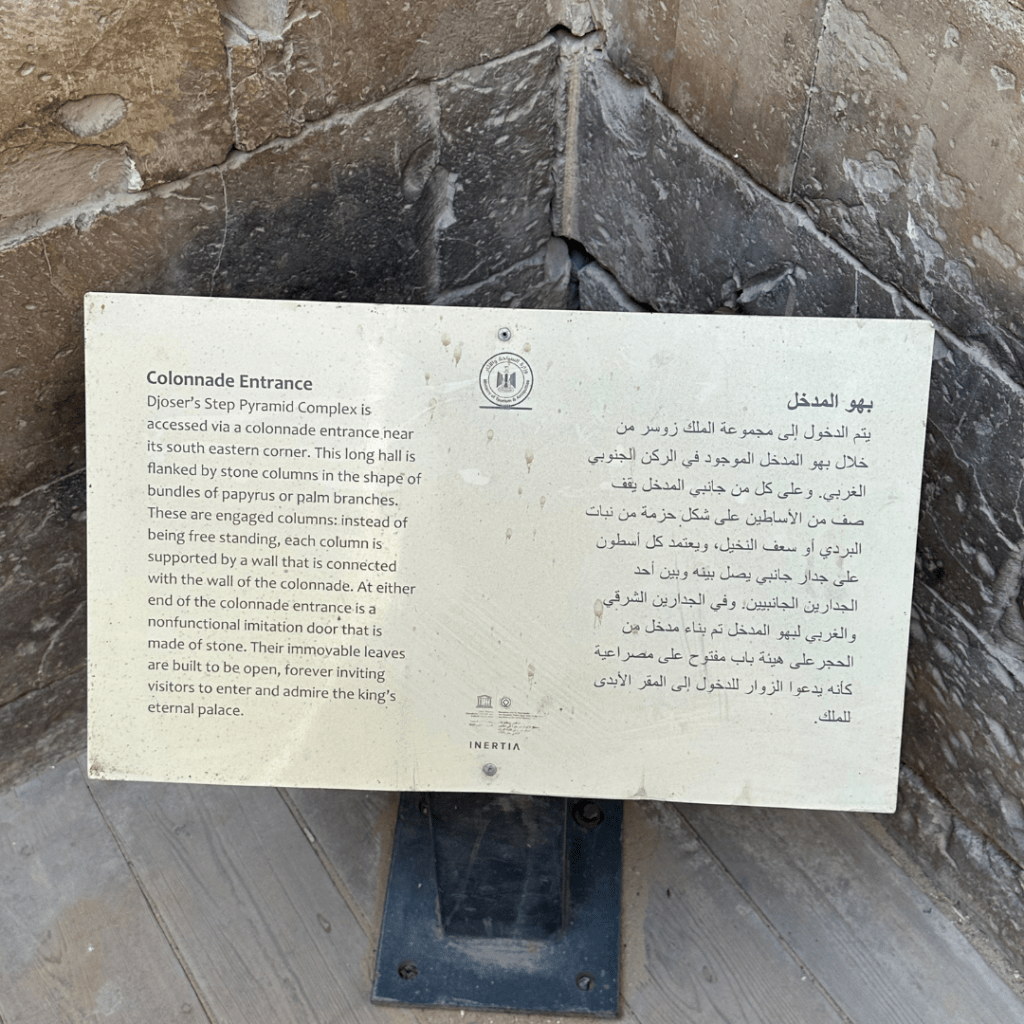
The Entrance Colonnade was the first structure I noticed when arriving at Saqqara, and it instantly drew me in. This long stone passageway leads into the Step Pyramid complex and represents the transition from the living world to the afterlife. Walking through, you’ll pass between huge pillars — also a perfect spot to grab some photos before exploring further.

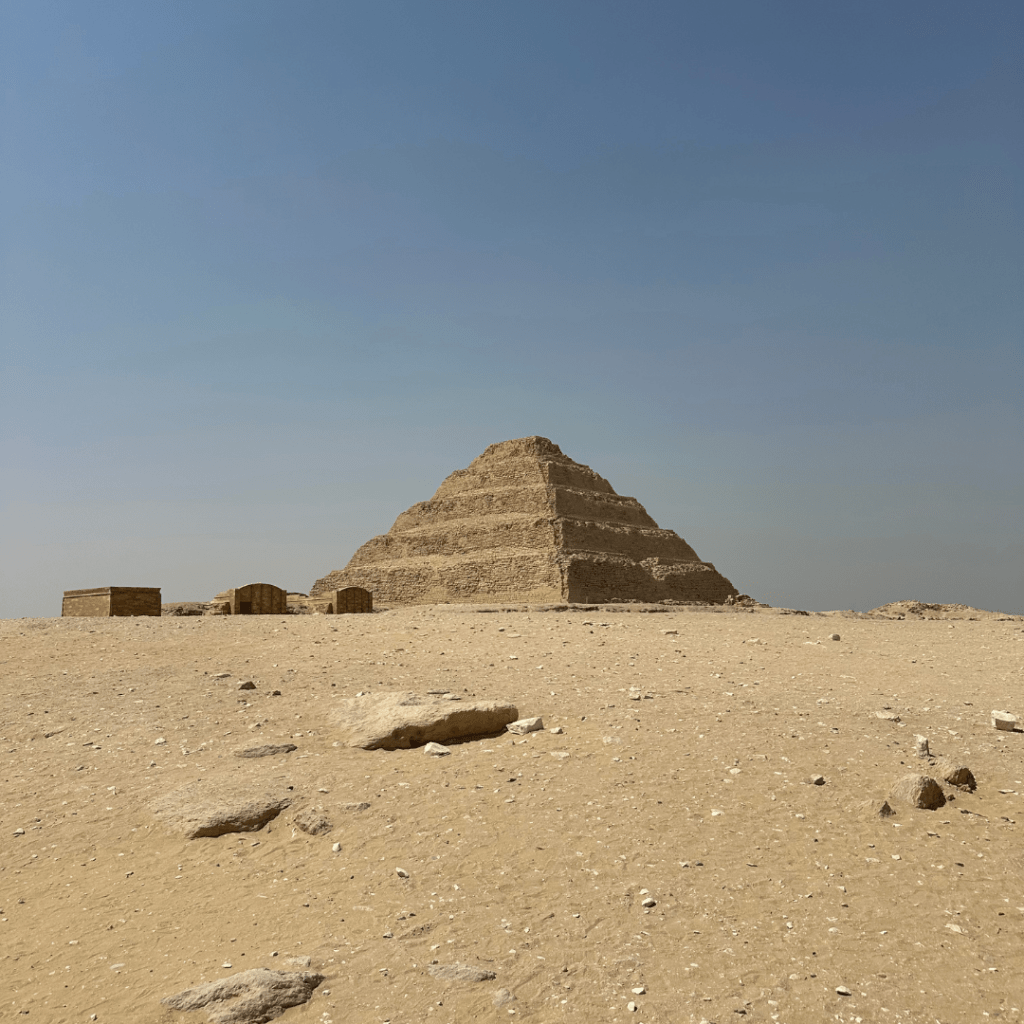
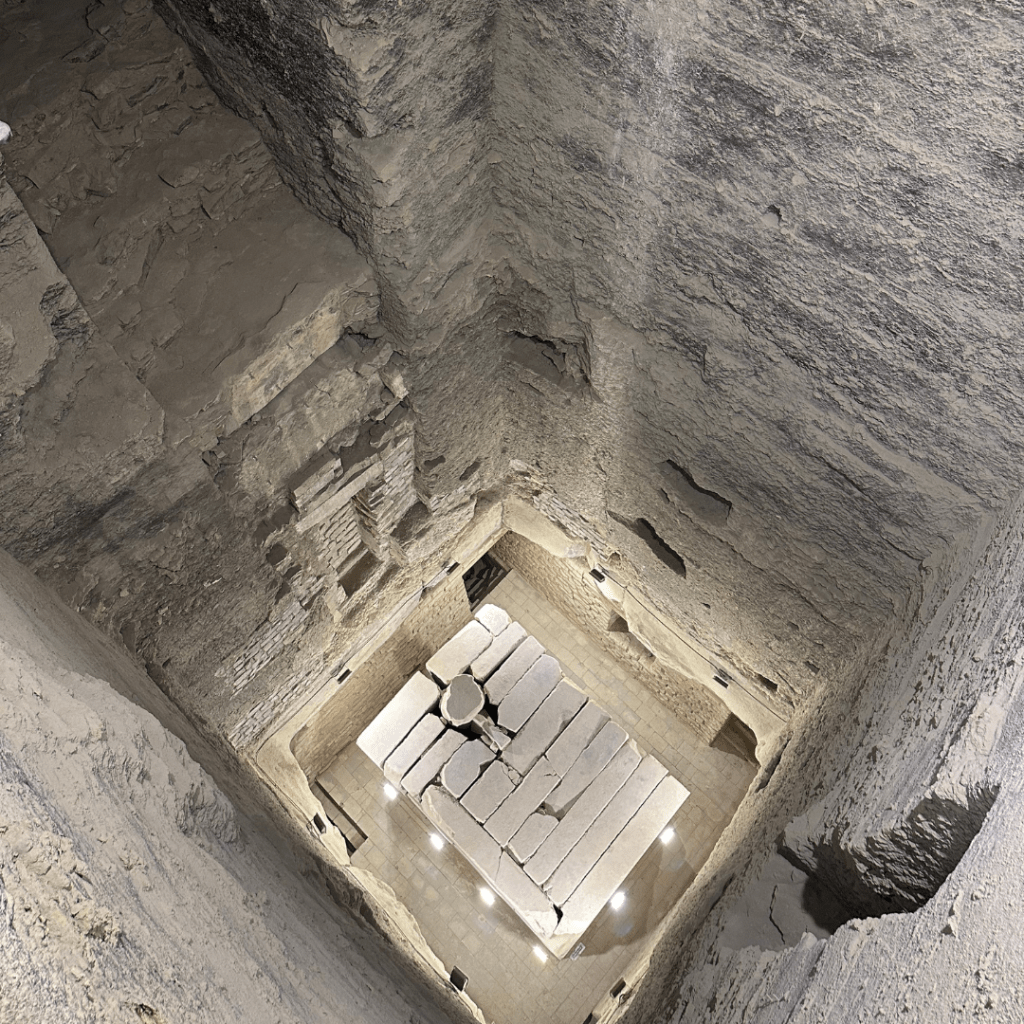
2. Step Pyramid of Djoser
Fun fact: the Step Pyramid of Djoser is the first pyramid ever built in the world, designed by Imhotep for Pharaoh Djoser during the 3rd Dynasty. Unlike the smooth-sided pyramids at Giza, this one was built to resemble a giant staircase rising toward the sky.
You can go inside with an additional ticket, and I highly recommend it. I went in after my tour guide suggested it, and I’m glad I did — the interior is spacious and bright.
- Ticket entry cost (inside): EGP 150 / about $3 USD
3. Mastaba Tombs
These flat-roofed tombs belonged to nobles and officials, decorated with beautifully preserved carvings and wall paintings that depict daily life in ancient Egypt.
4. The Serapeum
The Serapeum was an underground burial site for the sacred Apis bulls, with massive granite sarcophagi lining its long tunnels. Walking through, you really get a sense of the scale and effort it took to create such a unique burial place. Entry requires a separate ticket, so keep that in mind when planning your visit.
- Ticket entry cost (inside): EGP 150 / about $3 USD
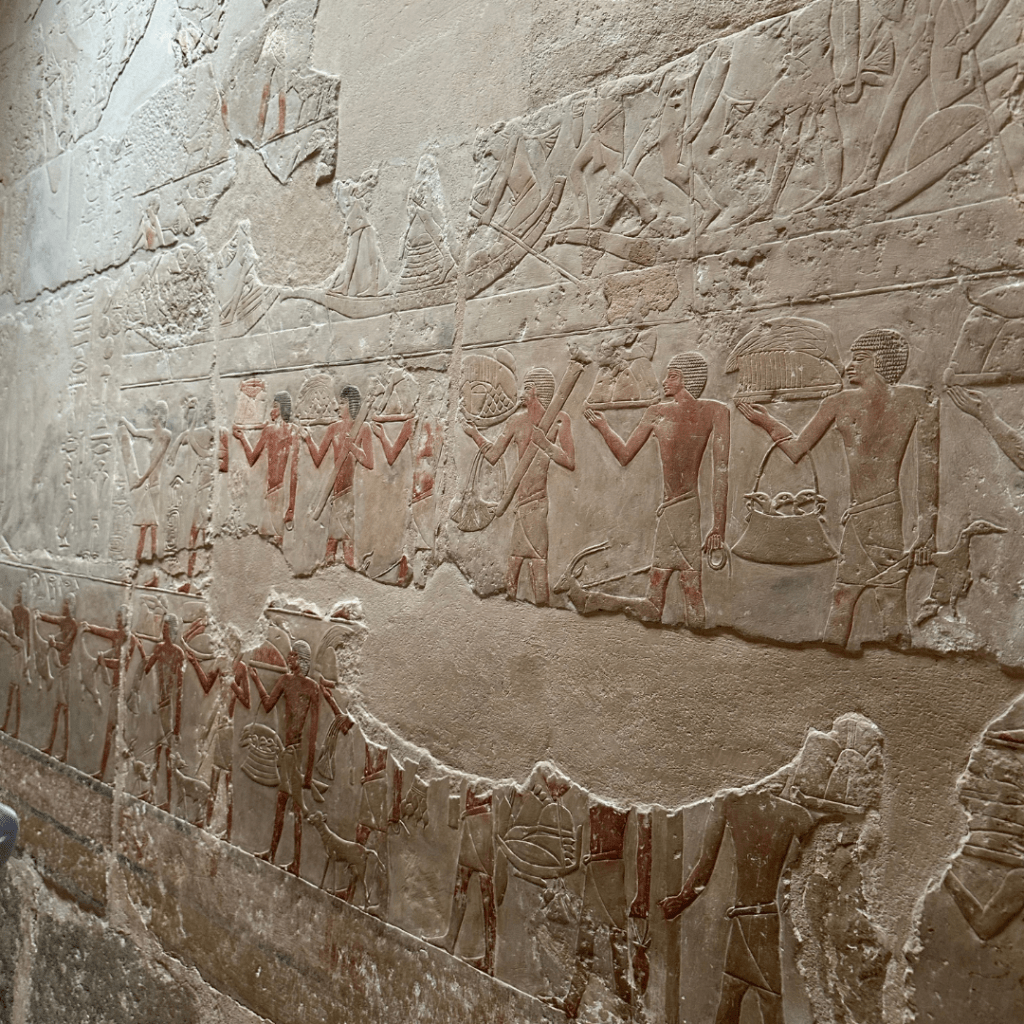
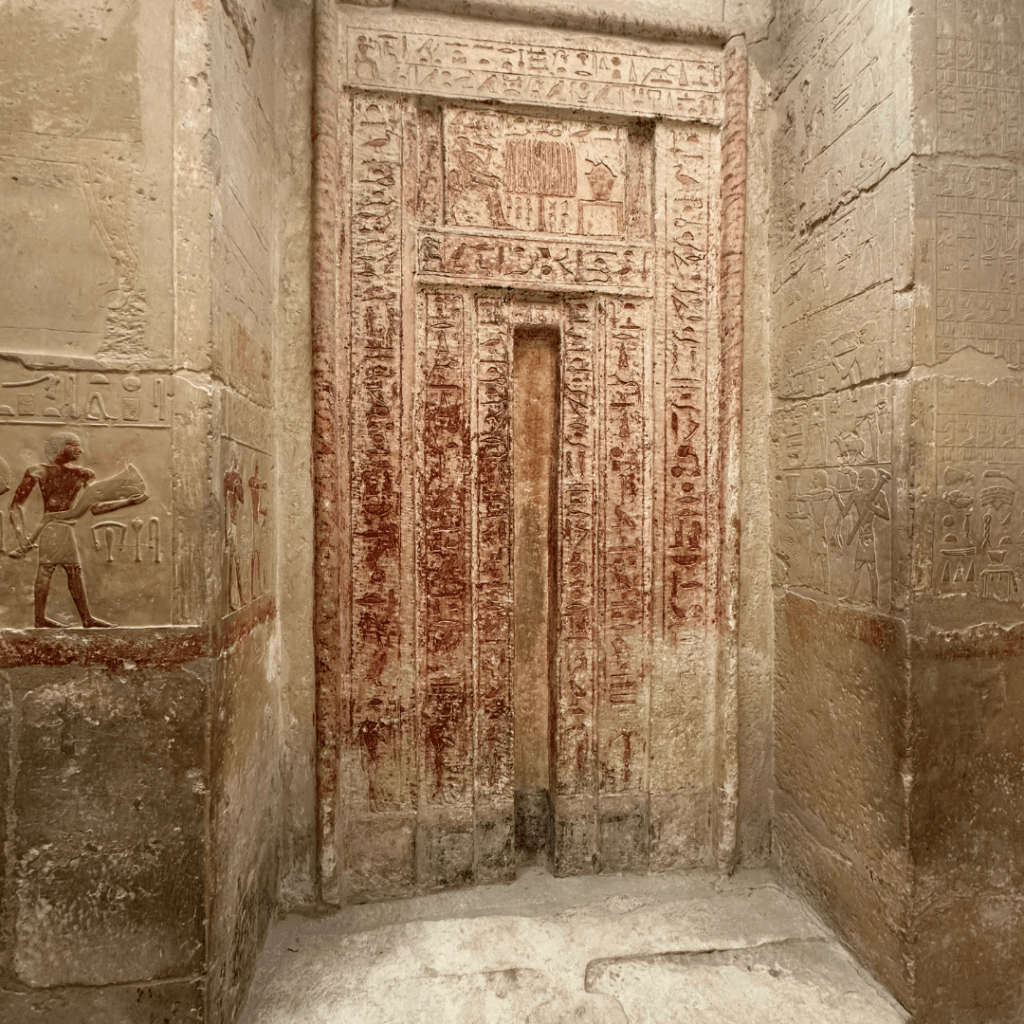
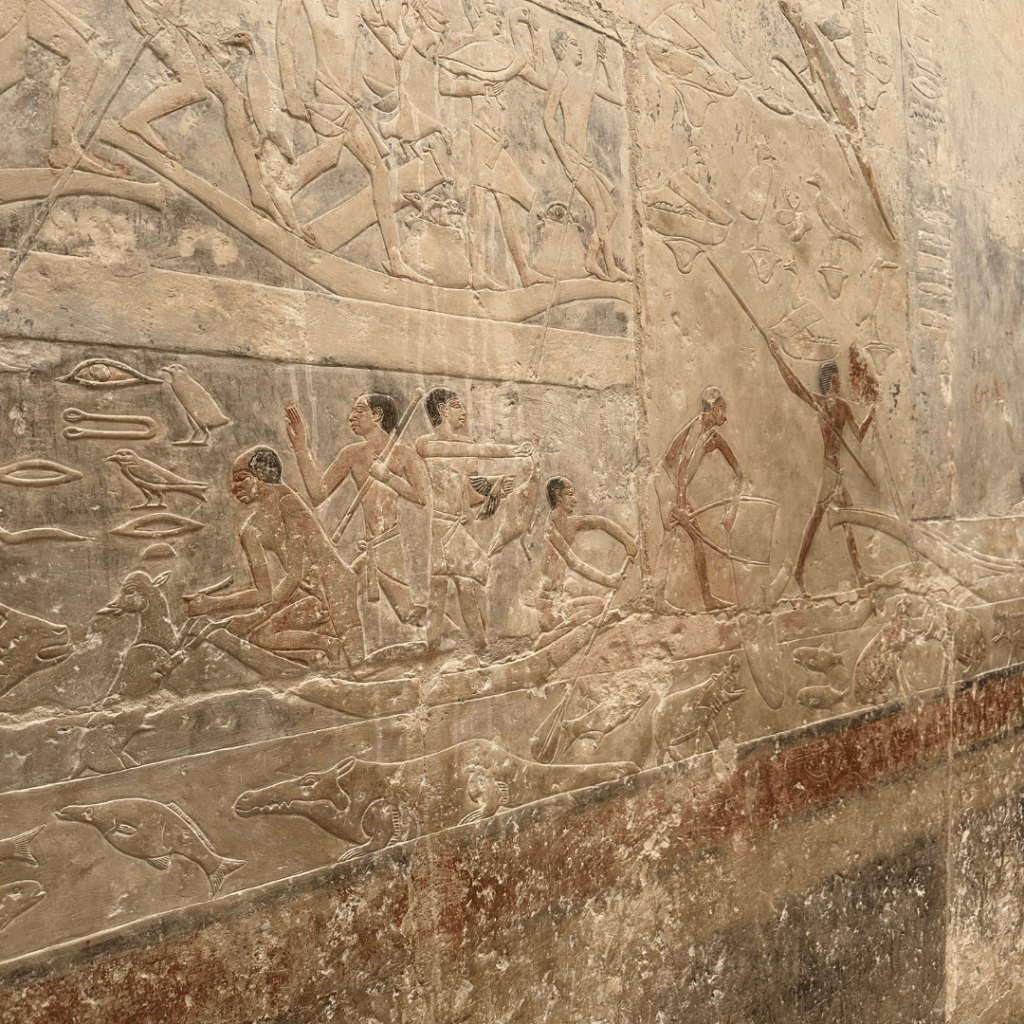
5. Tomb of Seshseshet Idut
The Tomb of Seshseshet Idut is one of the most beautiful mastabas in Saqqara. Inside, the walls are decorated with incredibly detailed reliefs showing scenes of daily life — fishing, hunting, and even hippos being captured. The artwork is still vivid after thousands of years, making it feel like you’re peeking straight into ancient Egypt.
- Ticket entry cost (inside): EGP 150 / about $3 USD
How Much Time to Spend
The average time to spend at Saqqara is around 2–3 hours. This allows you to see the Step Pyramid, Entrance Colonnade, Mastaba tombs, and still have time for extras like the Serapeum or the Tomb of Seshseshet Idut.
A Glimpse into Memphis
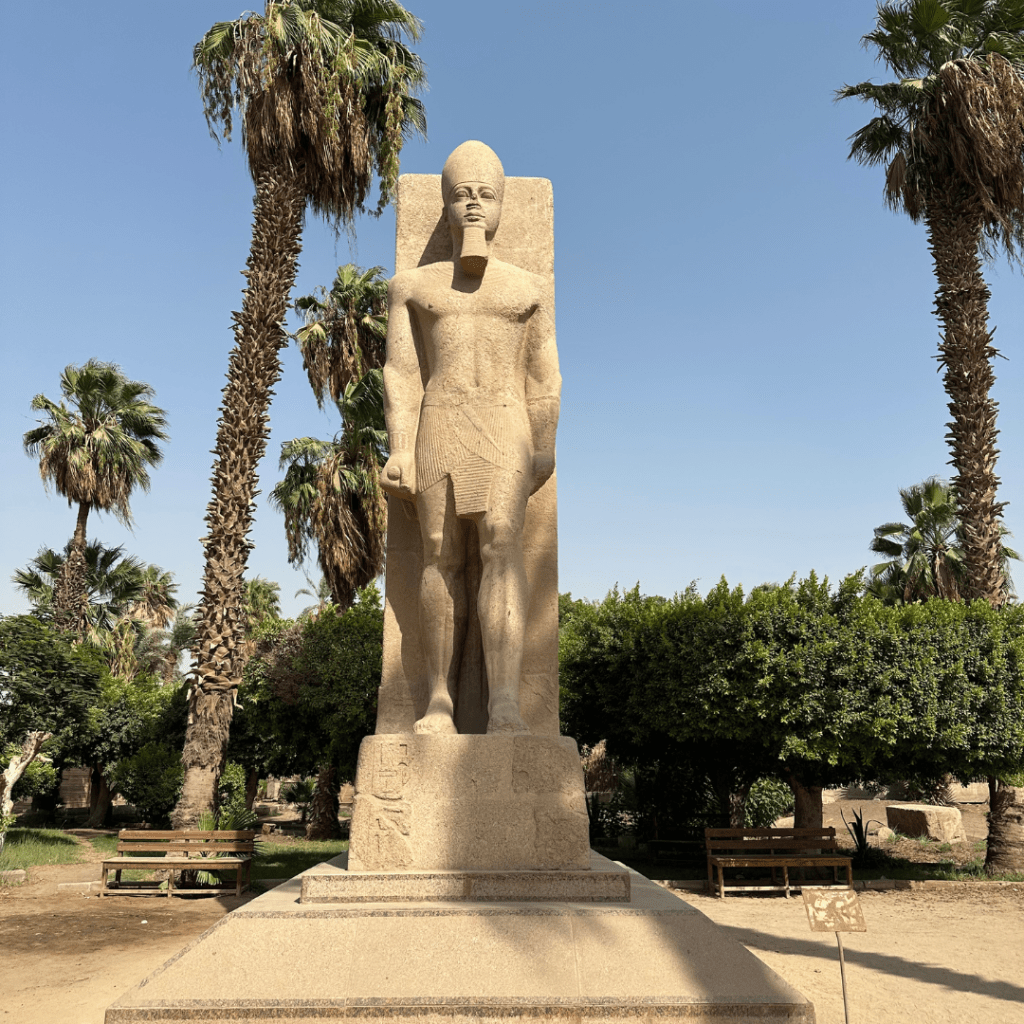
Most travelers skip Memphis and focus on the Giza Plateau and Saqqara. But Memphis has its own rich history as the first capital of Egypt. Located about 30 km (19 miles) south of Cairo and just a short drive from Saqqara, this ancient city makes a great stop if you have extra time in your day. The general entry ticket to Memphis (Mit Rahina Museum) is EGP 150 / about $3 USD.
When I visited, the highlight was the Mit Rahina Museum, the best place to see and learn about what remains of Memphis. Here’s what to know.
Highlights of Mit Rahina Museum
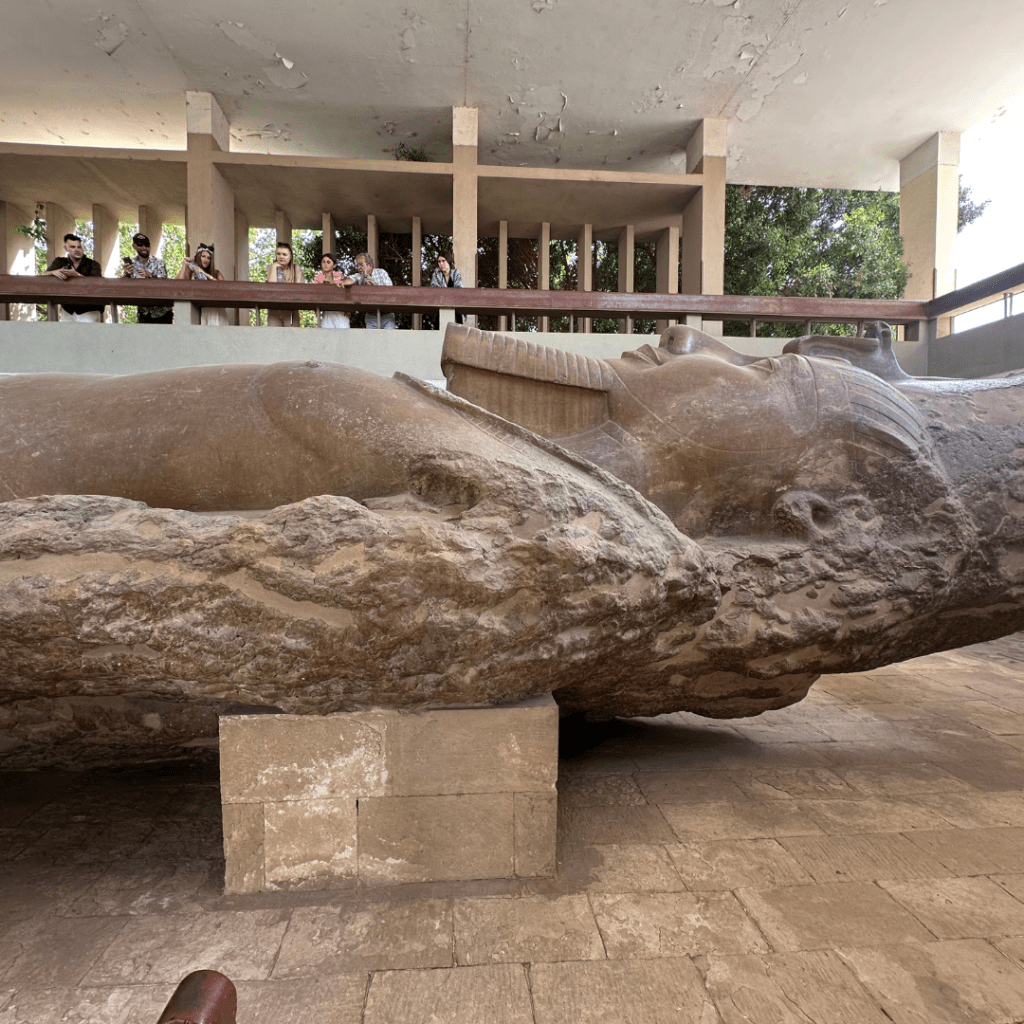
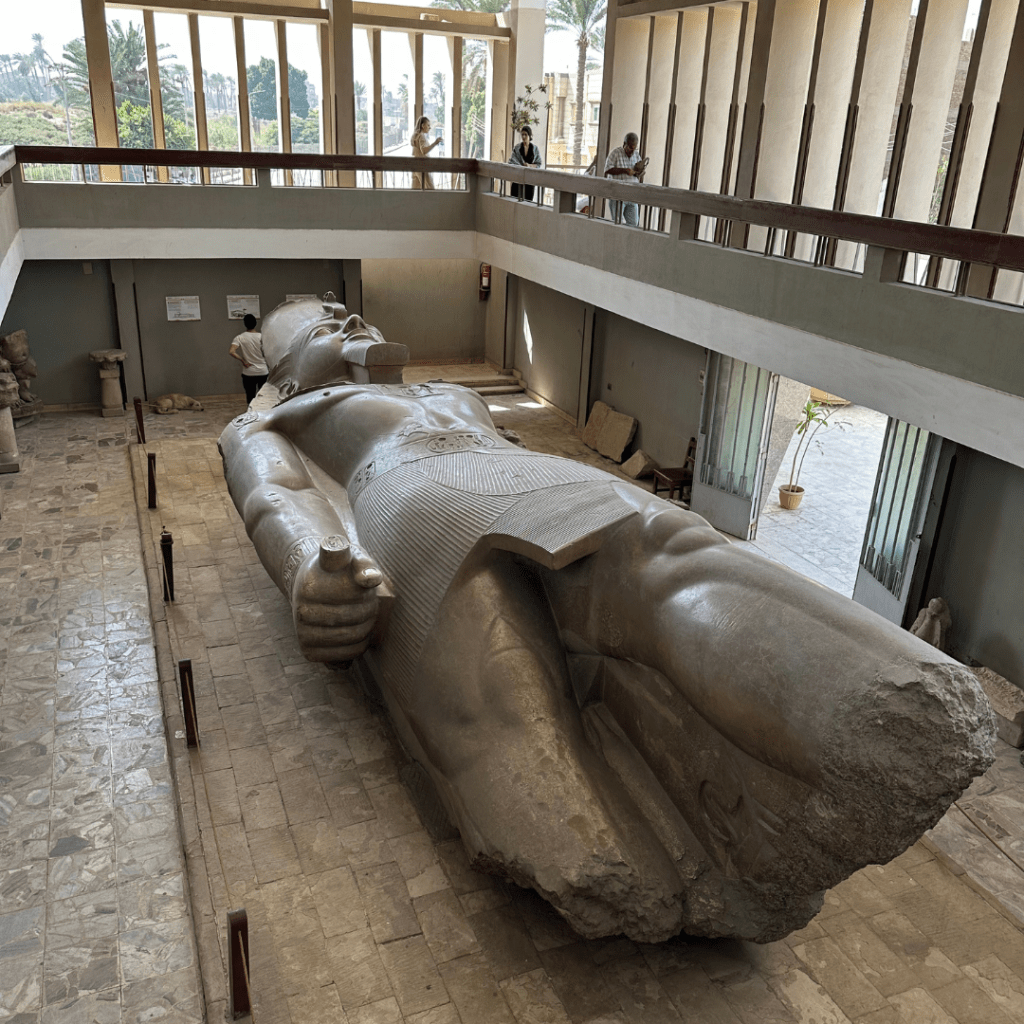
1. Colossus of Ramses II
One of the first things you will see when entering the Mit Rahina Museum is the Colossus of Ramses II. The statue is absolutely massive, so big that it has to lie flat because it is too fragile to stand upright. Standing beside it, you really get a sense of how grand Memphis must have been in its time.
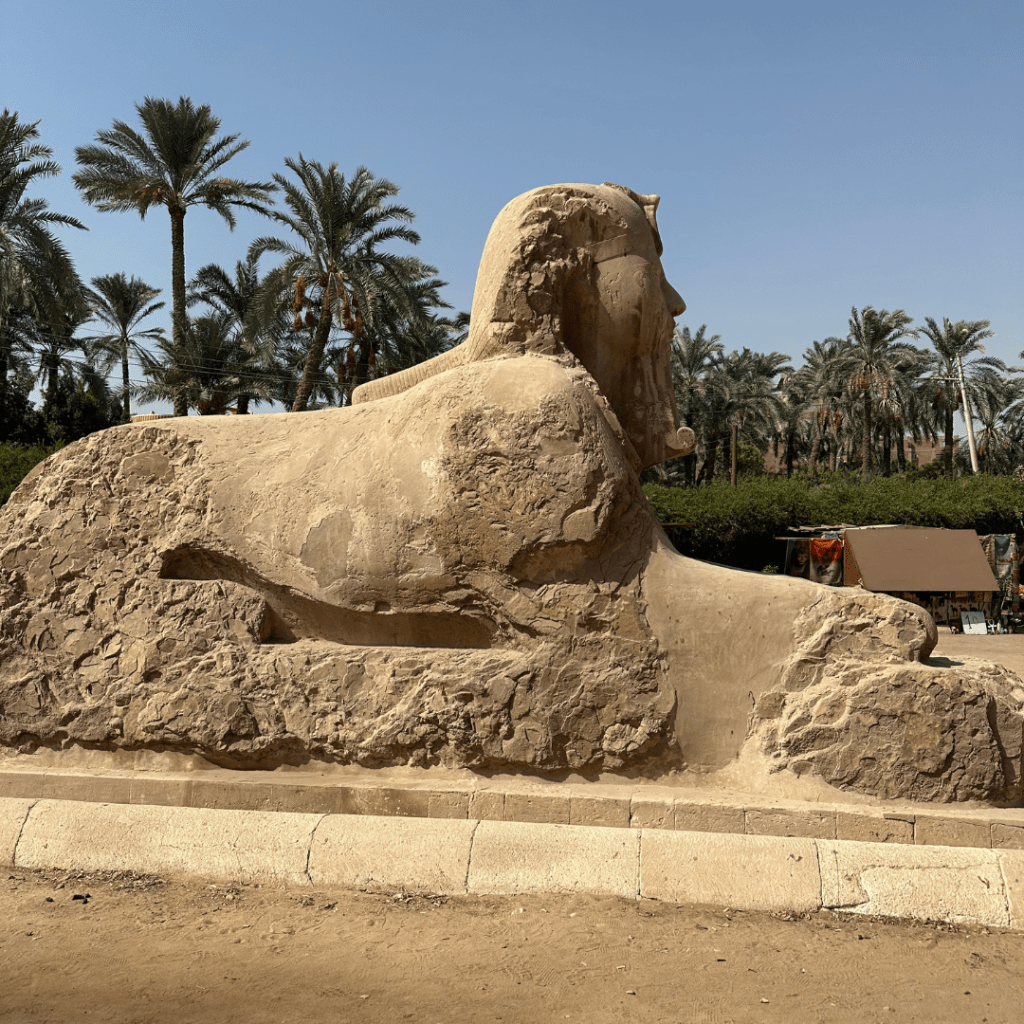
2. Alabaster Sphinx of Memphis
As the Mit Rahina Museum is both indoor and outdoor, inside you will find the Colossus of Ramses II. Outside, you will see the Alabaster Sphinx of Memphis, a smaller counterpart to the Great Sphinx in Giza. Carved from limestone, it remains an impressive monument and is considered second only in fame to the Great Sphinx.
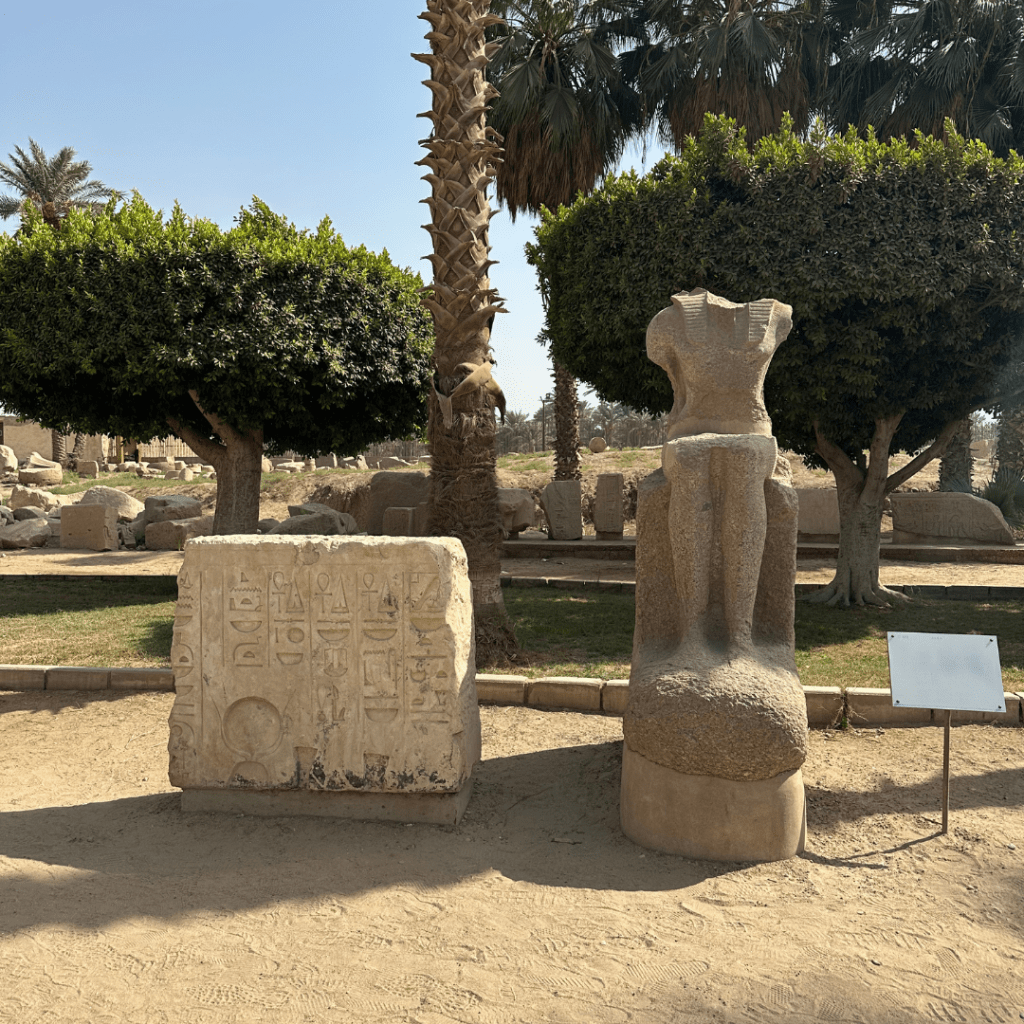
3. Other Statues and Artifacts
Beyond the Colossus and the Alabaster Sphinx, the Mit Rahina Museum also displays smaller statues of Ramses II, Sekhmet, and other deities. Scattered throughout the open-air courtyard, you will also find stelae, carved blocks, inscriptions, and fragments from temples that once stood in ancient Memphis.
Overall, Memphis may not be as vast or overwhelming as the Giza Plateau or Saqqara, but it is still a worthwhile stop. The Mit Rahina Museum gives you a chance to see what remains of Egypt’s first capital and adds another layer of history to your day trip.
How Much Time to Spend
The average time to spend at Memphis is around 30–45 minutes. The Mit Rahina Museum is compact, so you can easily see the Colossus of Ramses II, the Alabaster Sphinx, and other artifacts without taking too much time from your day.
Final Thoughts
After visiting these three sites, I was glad to finally cross one of my biggest travel goals off my list. Standing at the Pyramids of Giza, walking through Saqqara’s ancient tombs, and seeing what remains of Memphis made me appreciate Egypt’s history in a whole new way. These are truly must-see places, and experiencing them all in one day was an adventure I will always remember.
If Egypt is on your bucket list, make sure these three sites are at the top of your itinerary.

 FindKristineAbroad
Leave a comment